News ·
The Authenticity Premium: Why human stories will become more valuable in the age of AI
As AI makes content faster and easier to create, authentic human stories are becoming more valuable than ever. We explore why nonprofits have a unique advantage in the age of AI, and how real people, real experiences and honest storytelling can build trust, deepen connections and inspire action.
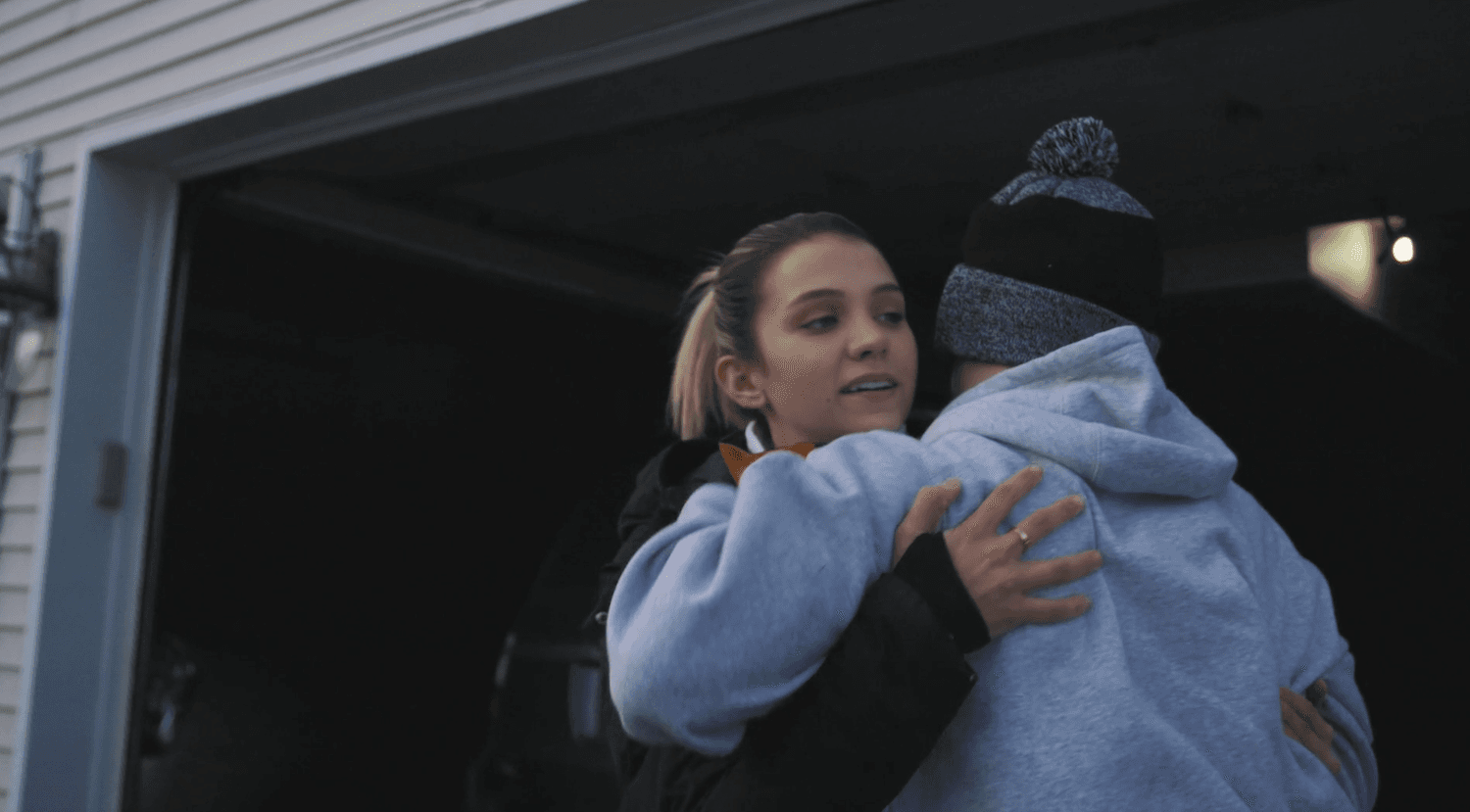
Why human stories will become more valuable in the age of AI for your nonprofit
by Benjamin Potter, CEO, CLICKON MEDIA
We are about to have more content than at any point in human history.
Actually, we probably already do.
Every day, millions of videos, articles, images, podcasts, posts and emails compete for our attention.
And AI is about to dramatically increase that number.
Writing is getting faster.
Editing is getting faster.
Translation is getting faster.
Images can be created in seconds.
Video is rapidly heading in the same direction.
Soon, almost anyone will be able to make almost anything.
Which creates an interesting problem.
When anyone can create anything, what do we actually believe?
For nonprofits, the answer might be surprisingly simple.
People.
Real ones.
Welcome to the authenticity premium
We believe something interesting is going to happen over the next few years.
As synthetic content becomes easier to create, authentic human stories will become more valuable, not less.
We call this The Authenticity Premium.
Think about what happened with photography.
For years, brands spent enormous amounts of money creating perfectly polished images.
Perfect lighting.
Perfect locations.
Perfect people drinking coffee while laughing inexplicably hard at something happening just outside the frame.
Then social media happened.
Suddenly, audiences started responding to content that looked completely different.
Real people.
Real environments.
Real moments.
Sometimes slightly terrible lighting.
Because it felt true.
AI is likely to accelerate that shift.
The internet is going to become increasingly full of things that look incredible.
The question audiences will increasingly ask is:
Did this actually happen?
For nonprofits, that's an enormous opportunity.
Because the answer is usually yes.
Nonprofits have something AI can't manufacture
The organizations doing meaningful work around the world have access to something incredibly valuable.
Reality.
A student experiencing inclusion at school for the first time.
A parent watching their child achieve something they weren't sure was possible.
A volunteer whose life changed because they decided to help someone else.
A family navigating a diagnosis.
A community solving a problem together.
An athlete crossing a finish line.
A teacher realizing the students they thought they were helping have changed them too.
These aren't marketing concepts.
They happened.
And that matters.
AI can generate an image of an athlete crossing a finish line.
It can write a moving paragraph about what that moment might feel like.
It could probably add inspirational piano music too.
But it wasn't there.
Your organization was.
That distinction is going to become incredibly important.
Trust is becoming a creative problem
For years, nonprofit marketers have understandably focused on awareness.
How many people saw the campaign?
How many watched the video?
How many clicked?
How many donated?
Those things still matter.
But increasingly, there is another question sitting underneath all of them:
Do people believe us?
Audiences are becoming more skeptical.
They are better at recognizing marketing.
They know when they're being sold to.
And they are increasingly aware that the image, voice or even person they're looking at might not be real.
That means trust can no longer be something that sits quietly underneath your communications strategy.
Trust needs to become part of the creative strategy itself.
And one of the most effective ways to build trust is remarkably old fashioned.
Put a real person in front of a camera.
Ask them a good question.
And listen.
Please don't make everyone sound like your organization
There is another temptation nonprofits should resist.
Over scripting.
Anyone who has worked in communications knows how this happens.
A wonderful interview takes place.
Someone says something emotional, unexpected and beautifully human.
Then the quote gets reviewed.
And reviewed again.
And somewhere around version seven, our wonderfully human person suddenly sounds like they have spent 14 years working in corporate communications.
"Through this transformative initiative, I have been empowered to realize my full potential."
Nobody talks like that.
Not even the person who wrote it.
Authenticity isn't just about putting real people on screen.
It's about allowing them to remain real once they get there.
That means leaving in personality.
Humor.
Pauses.
Accents.
Imperfection.
Sometimes even the sentence you weren't expecting.
The objective shouldn't be getting somebody to perfectly deliver the organization's message.
It should be creating an environment where somebody can tell the truth.
The best stories don't always look like advertising
This may require organizations to become more comfortable with imperfection.
Not every piece of content needs to look like a commercial.
Some absolutely should.
There will always be a place for beautifully crafted documentary films, major campaigns and cinematic storytelling.
But alongside those should exist smaller, more immediate stories.
A conversation.
A moment captured on a phone.
A participant answering one question.
A volunteer taking us behind the scenes.
A filmmaker spending a day inside a community.
A photograph accompanied by someone's own words.
Different levels of production can coexist.
In fact, they should.
Because authenticity isn't a production value.
It's a feeling.
You can spend $500,000 making something authentic.
You can also spend $500.
You can unfortunately spend $500,000 making something that feels completely fake.
We've all seen those too.
AI isn't the enemy
None of this means nonprofits should avoid AI.
Quite the opposite.
AI has the potential to be one of the biggest productivity breakthroughs nonprofit communications teams have ever had.
The opportunity is simply to use it in the right places.
Use AI to transcribe a two hour interview in minutes.
Use it to search hundreds of hours of footage.
Use it to identify themes across conversations.
Use it to create captions.
Use it to translate a story so someone thousands of miles away can understand it.
Use it to create different versions for different platforms.
Use it to help small communications teams do things that previously required much larger teams.
There are dozens of places where AI can make storytelling faster, cheaper and more accessible.
But there's an important distinction.
Use AI to help tell the story. Don't use AI to replace the story.
The human should remain at the center.
The messiness is often the magic
Some of the most powerful moments we've captured over the years weren't in the script.
Someone laughed.
Someone cried.
Someone completely ignored the question and told us something much better.
A child wandered into the interview.
A teacher said something they clearly hadn't planned to say.
A parent needed a moment before answering.
Those moments are difficult to manufacture.
That's precisely why audiences respond to them.
Human beings are messy.
We interrupt ourselves.
We change our minds halfway through sentences.
We laugh at inappropriate moments.
We say "um."
Quite a lot, actually.
And when everything else around us becomes increasingly polished by technology, those little imperfections become signals.
This is real.
Proof of humanity may become a creative asset
Imagine the internet in a few years.
AI generated influencers.
Synthetic voices.
Virtual presenters.
Entirely generated advertisements.
Perfectly written articles.
Perfectly lit people who have never actually existed.
Against that backdrop, imagine opening a film and seeing:
This story is real.
These are their words.
This happened.
That becomes powerful.
Documentary storytelling starts functioning almost like proof of humanity.
We may even see organizations deliberately showing more of the process.
The filmmaker in the room.
The location.
Behind the scenes footage.
The moment before the interview.
The moment after it.
Not because audiences suddenly care about cameras.
But because context provides credibility.
It reminds us there was a real person on the other side of the lens.
Nonprofits are sitting on an extraordinary advantage
Most brands have to invent stories.
Nonprofits usually have to find them.
That's a very different problem.
Across an organization there might be thousands of people experiencing its mission every year.
Thousands of stories about progress, frustration, hope, humor, setbacks and change.
Historically, only a tiny percentage could ever be captured.
Technology is changing that.
Distributed production makes it possible to reach more communities.
Smaller crews make production more affordable.
Phones make everyone a potential contributor.
AI makes enormous libraries of content easier to organize and use.
The opportunity isn't to manufacture more stories.
It's to uncover more of the stories already happening.
The organizations people trust will win
There will be plenty of conversations over the next few years about whether audiences can identify AI generated content.
But perhaps that's not quite the right question.
The more important question for organizations is:
Can audiences identify you as trustworthy?
Trust is built slowly.
Through consistency.
Transparency.
Evidence.
And people.
Real people telling real stories about what an organization actually did.
The technology around those stories will keep changing.
Cameras will get better.
Production will get faster.
AI will become extraordinarily powerful.
Distribution will continue evolving.
But the fundamental reason storytelling works hasn't changed much in thousands of years.
One human being experiences something.
They tell another human being about it.
And that person feels something.
In the age of artificial intelligence, that might become more powerful than ever.
Because when almost anything can be created artificially, reality becomes the most valuable creative asset we have.